
![]() |
We think of science as cold and factual, but there have been some highly charged disputes in its history. Much passion was expended trying to decide whether our planet revolves around the sun, or whether homo sapiens and the apes have a common ancestor, or more recently, whether Pluto should be considered a planet.
But nothing in the modern era compares with the full-scale brawl developing over global warming. To date, the high ground has belonged to climatologists who see unmistakable evidence of a crisis.
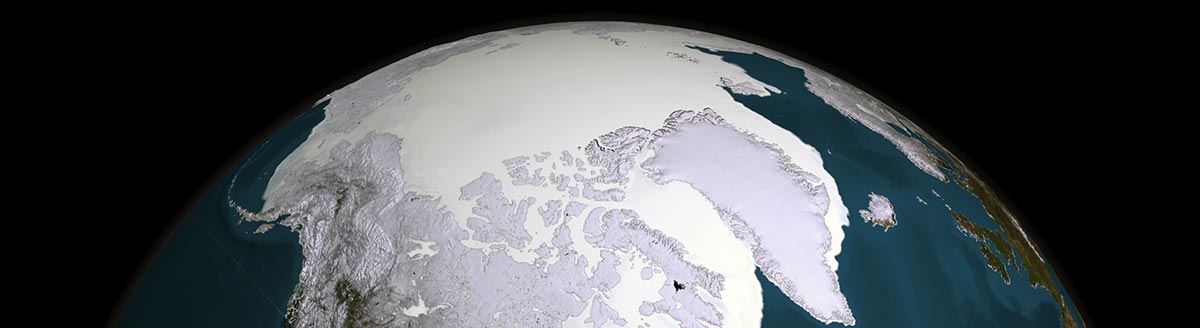
They point to the rapid melt of sea ice in the Arctic, the receding pattern of glaciers in Alaska, Patagonia and Greenland, the rising level of the world's oceans. They note the upswing of global temperatures in the 20th century. And they believe this is merely the forerunner of a much larger temperature increase still to come.
Moreover they have no doubt the results will be catastrophic unless corrective measures are taken. Scientists at the Massachusetts Institute of Technology state bluntly that climate change has the potential of "killing billions of people worldwide and leaving the world on the brink of total collapse." The United Nations recently issued a publication claiming the annual death count already stands at 300,000.
Beyond question, these views are shared by the great majority of climatologists. Yet not, it seems, by all.
A few isolated critics have raised difficulties. Some were cranks, and few had standing in the scientific community. Their objections were easily dismissed. But now, a group of respected academics has published a study challenging the majority view.
(You can read their report, Climate Change Reconsidered, at www.nipccreport.org.)
More than 9,000 scholars with doctorates in scientific disciplines have signed a petition of support.
The group disputes not only the theory of climate change, but many of the facts underlying it.
On the matter of sea ice and glaciers, they note that ice coverage in Antarctica has actually increased, while Arctic levels appear to have stabilized. They see little evidence that recent reductions in glacier size are outside the historical trend.
They found no increase in precipitation worldwide, and no overall rise or decline in river levels. They claim that droughts and floods are no more common, or severe, than before, and that wind speeds and storm intensities are unchanged. These observations appear to contradict some basic predictions of climate change theory.
But their most contentious claims have to do with global temperature trends. They believe the observed increase of just under 1º C in the 20th century has no predictive value.
They point out that during previous warm periods over the last millennium, temperatures rose 2º or 3º C. Moreover, they claim satellite data show the upward shift of recent years has slowed dramatically in the current decade.
Finally, they reject the UN view that global warming has caused heightened mortality.
They argue that moderate temperature increases actually reduce the incidence of cardiovascular disease and respiratory ailments.
It is impossible for most laymen to weigh the merit of these claims. Much of the argument turns on highly technical areas of oceanography and atmospheric science.
But this is more than an academic dispute. Across the globe, governments are taking unprecedented steps to change the foundations of industrial production. These measures involve significant costs, which the consumer must bear.
Science is rarely settled or static. New information and theories emerge. The free contention of ideas brings progress.
As we embark on policy changes that affect nearly every aspect of our lives, it's important to recognize that the debate on climate change and its causes should continue.
WHAT'S NEWJames M. Taylor - March 10, 2010
Environment Maine released a solar power report and related press release yesterday claiming, “Solar power is also increasingly cost competitive with ... (read more)
Walter Cunningham - March 09, 2010
[Editor’s note: This is the third article in a series by scientist/astronaut Walter Cunningham, who was the pilot of the Apollo 7 space mission and ... (read more)
James M. Taylor - March 09, 2010
The American Wind Energy Association, which lobbies for the wind power industry, contacted the Obama administration and convinced them to work together, ... (read more)
Edited by James M. Taylor - March 01, 2010
The March 2010 issue of Environment & Climates News reports that the release of emails and scientific documents from the Climatic Research Unit of the ... (read more)
Alyssa Carducci - March 08, 2010
Pollution from Asia is crossing the Pacific Ocean and causing increases in U.S. ozone levels even though U.S. ozone precursor emissions are declining, reports ... (read more)
Krystle Russin - March 08, 2010
A joint venture between two paper companies is testing the feasibility of introducing genetically modified eucalyptus trees as a new staple crop in the ... (read more)
Bruce Edward Walker - March 08, 2010
The Kennecott Eagle Mineral Company in Michigan’s economically depressed Upper Peninsula has finally received the environmental permits necessary ... (read more)
Bonner R. Cohen - March 08, 2010
Newly sworn-in Virginia Governor Bob McDonnell’s pledge to make the state the “energy capital of the East Coast” has run into a roadblock ... (read more)
Krystle Russin - March 08, 2010
A trio of new polls shows the public does not believe alarmist assertions that people are causing a global warming crisis. The new polls reinforce stinging ... (read more)
James M. Taylor - March 08, 2010
The Obama administration is in danger of losing an ace up its sleeve in the global warming battle, as another Senate Democrat has indicated he will support ... (read more)
POLICYBOT: ENVIRONMENT |